How to get more people to care.
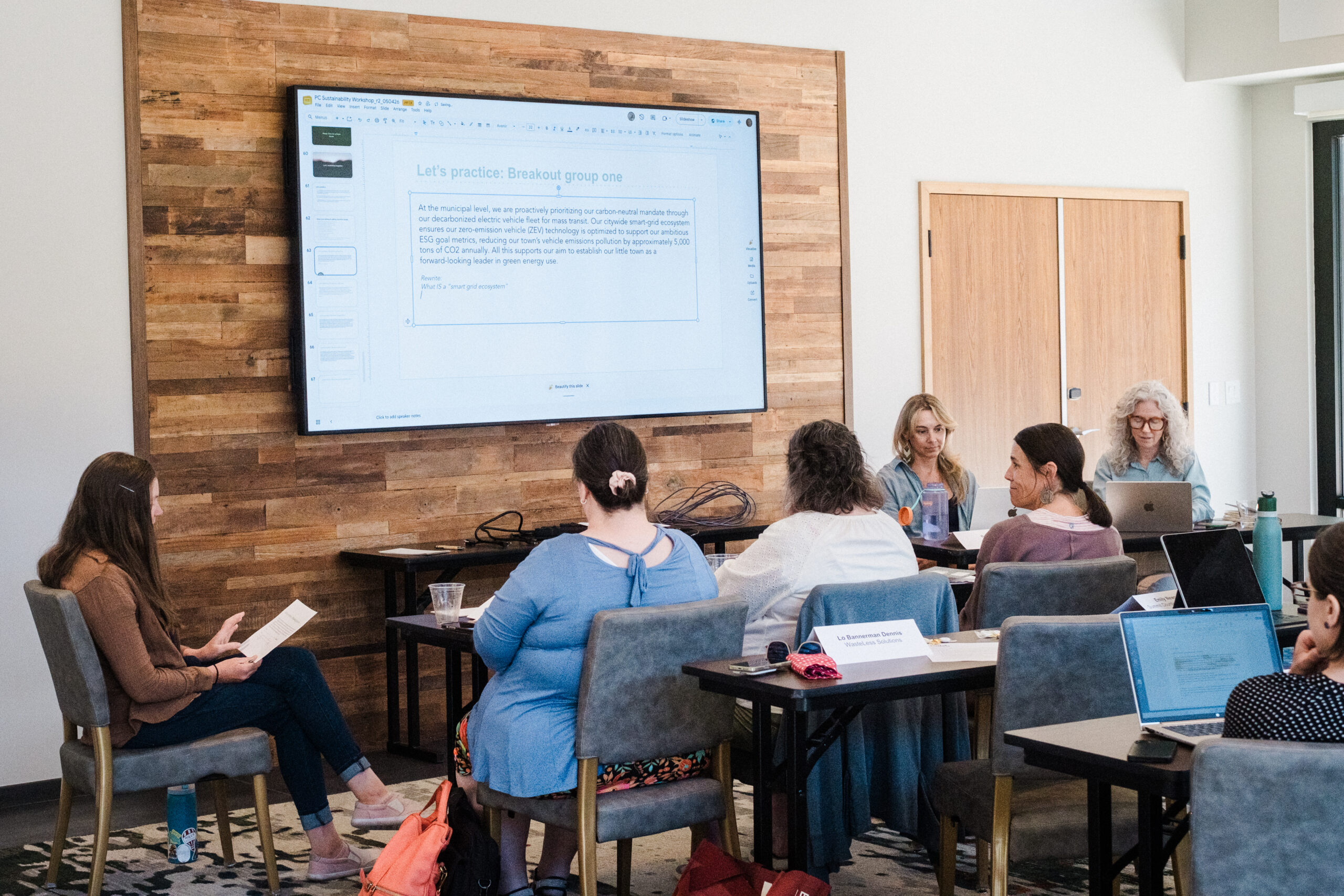
With the right people in the room, just about any place can be a safe space to share our struggles and learn together. But it sure doesn’t hurt when that space is a light-filled classroom with panoramic glass doors flung open to catch the cool mountain breeze. This was the setting for our “Beyond Buzzwords” workshop last week, hosted by the Park City Chamber for sustainability leaders throughout the region.
Nestled amid Park City’s quiet mountains and under its bluebird skies, we talked candidly about workplace anxieties, climate catastrophes, and AI everything, wondering how to carry it all while working to build a better world—starting one person, one neighborhood, and one community at a time.
The folks who gathered with us are on the frontlines of this work. They’re preserving natural landscapes. Irrigating orchards with less water. Rescuing food from the landfill (including our workshop lunch leftovers). And they’re all asking, like so many of their fellow changemakers out there, how do we get more people to care?
The good news: There are proven tools and strategies that can help. And anyone can learn them. The trick is that you’ve got to think differently about your sustainability content. You’ve got to think like a storyteller, not just a conveyor of information. You’ve got to translate the climate jargon into simple, human language. And you’ve got to be willing to take a few lessons from the marketing playbook, which you can absolutely do authentically and without greenwashing.
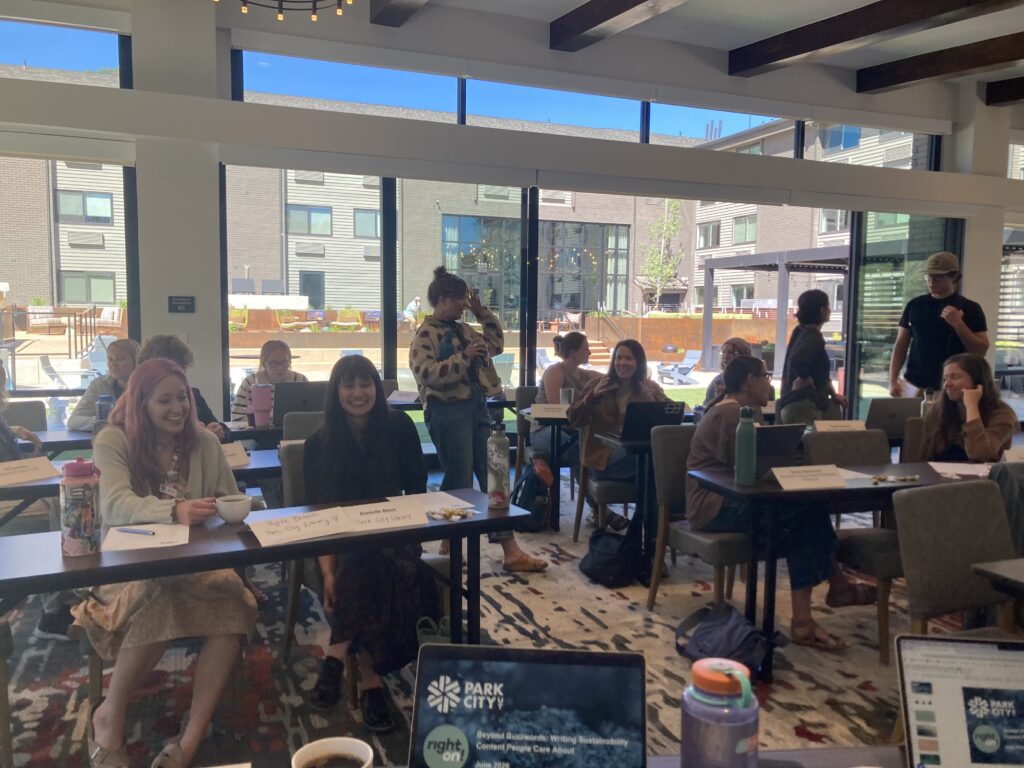
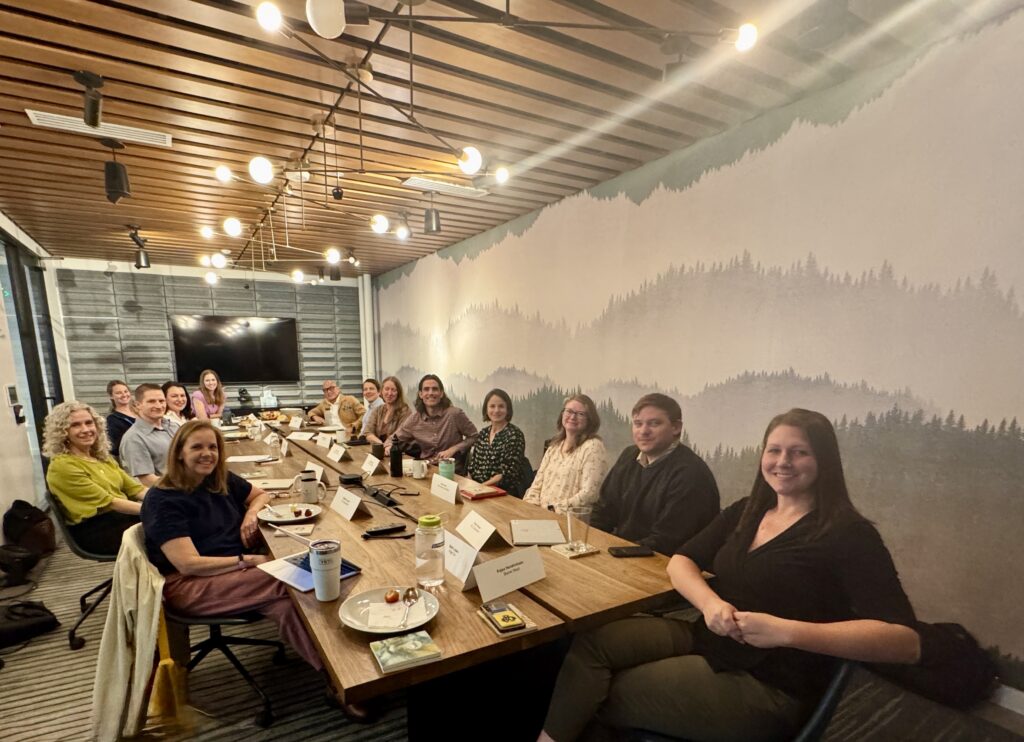
Our courageous cohort of sustainability leaders did just that. In a half day of communications lessons, lively discussion, and writing practice—with ample breaks for coffee and snacks—we showed them how better storytelling can be one of the most powerful sustainability solutions out there.
Here are just a few of the eureka! ideas folks called out at the end of the session:
- “I’ll think more about our audiences”—focusing on their hopes, fears, desires, and needs before creating any content.
- “I’ll find the right messengers”—bringing in unexpected voices that audiences can really relate to.
- “I’ll simplify my language”—choosing simple, human language without sacrificing technical details.
- “I’ll skip the sustainability jargon”—identifying the buzzwords, cliches and insider terms we naturally slip into, and finding simple, human alternatives.
- “I’ll avoid triggering tropes”—swapping unintentionally polarizing terms for neutral, nonpartisan language.
- “I’ll explore new ways to tell our stories”—choosing the right format and channel for each content type, and repurposing content to work across different platforms.
- “I’ll keep it local”—moving away from overwhelming “save the world” messages and showing audiences how to make an impact right in their communities.
- “I’ll infuse more personality”—remembering that sustainability content can have a little (or a lot!) of fun.
One of my favorite insights: A participant who told us she now had the evidence she needed to explain why emotional stories get better results. In fact, she was going back to her leaders with this intel and using it to advocate for more budget for communications. I can’t wait to see what she’ll do with the extra funding—and what it’ll make possible for her organization.
Want to bring a sustainability communications workshop to your team? Tell us more about your team’s unique challenges, and we’ll design a course that’s just right for you.
Our Most Recent Insights.
SEE ALL INSIGHTS →
Storytelling
A future that’s better than break even.
Lessons from a sustainability pioneer on hope, impact, and action.
Storytelling
Communicating without polarizing.
Protect your messages against cultural and political pendulum swings.
Storytelling
The elephant in the backyard.
Data center development is surging. How we talk about them matters.