
A future that’s better than break even.
What I love about working in sustainability is the people I get to meet. Because, as a general rule, they’re upstanding humans motivated by passion, empathy, purpose, and a collaborative spirit. And they’re big sharers of knowledge, information, and resources, believing that the more we all know, the greater our collective impact. Last month, at another coffee meet up hosted by Reed Omary and Julia Polk, I got to hear from one of these extraordinary people: Dodd Galbreath.
In 2007, Dodd founded the Institute for Sustainable Practice at Lipscomb University in Nashville, which put him way ahead of his time since it was the Southeast’s first, comprehensive, academic sustainability program. After the conversation, I left with a Word doc full of notes and heart full of hope. Like a true Southern storyteller, his answers to some big questions were winding in the best possible way—each creating a lovely story packed with humanity and emotion and ending with a call to action.
Anchoring sustainability in value.
What was it like when you tried to convince Lipscomb—a small, private, Christian university—to launch a sustainability program?
“Well, I realized early on that if you just keep your head down and do your job and create value, people are going to listen to you. We started off with a focus on value rather than a focus on ideology,” he told us. “We just tried to make it (sustainability) real in the moment.”
To do this, there were no academic theories or abstract concepts; Dodd got started by taking action. He spearheaded Lipscomb’s (and Tennessee’s) first LEED-certified classroom building. That led to more LEED-inspired projects across campus, which later resulted in introducing ground source heating and cooling technology. By making the value of sustainability visible through tangible benefits like energy use reduction, the culture shifted, and the program was born.
Redefining sustainability.
How do you define sustainability?
“Well, most of us know the UN definition: leave things for the next generation as good as we found them. But that definition really should say we want our kids to have it better than we have it. I just define it as better than break even.”
While Dodd’s definition may sound like a small shift in language, it’s actually an enormous shift in ambition. He believes (and I do too) that when it comes to the issues, programs, initiatives, and policy of sustainability we shouldn’t be striving to maintain. We must aim higher. Dodd admits this requires taking a long game approach, but it’s how we’ll solve some of our biggest challenges, like alternative ways to power AI data centers. “Nobody wants to be living paycheck to paycheck. So why should we expect that of our planet and our world population?”
Shifting the narrative.
What would you say to someone who wants to learn more about sustainability?
“It really does start with us. I’m thinking of Henry David Thoreau because I just watched the Ken Burns documentary (highly recommend!). He was a living example of showing people not just how much he cared, but how much he was willing to contribute to the community. To me, the climate crisis might be God’s version of a community catalyst. But for some reason in this modern world, instead of coming together we’re too focused on blame, on critiquing each other, on being right.”
Then my ears perked up and my fingers furiously hit the keyboard when he said, “I think we’ve got to change our language.” He followed that by talking about how we talk to one another. How our words can distance us from our cause. Most people tune out when we talk broadly about the impending doom of the climate crisis. Instead, we need to bring them into the conversation with stories about why they should care. And they can be simple, like this one about preserving my local creek and the adorable spotted salamanders that live there. As we’ve said at Right On, when we talk about the environmental or social issues in ways that divide, we lose people who might otherwise be with us.
Getting started.
What’s one call to action for next week?
“Be yourself and just go find a place to make a difference.”
It’s a sentiment and a theme I’ve been hearing a lot lately as the overwhelm of working in sustainability is getting heavier. Getting hyper local provides us with the opportunity to tap into sustainability solutions where we can see and live among the results. For Dodd that meant teaching himself (via YouTube videos) how to operate a Bobcat so he could plant 600 trees in his own yard. But you don’t have to operate heavy machinery to make a difference.
Plant a container garden in your backyard. Join a neighborhood conservation group. Tutor a young person from your local elementary school. Support a refugee resettlement program in your community. Then spread the word by having casual conversations with friends and family about why you care.
Leading with hope.
What does it mean to be a sustainability leader today?
“All of us, I think, are called to be leaders. And great leaders in history have achieved success by considering the opportunity versus the problem. If you don’t focus on what’s possible, you’ll adjust to what’s going on and let it happen. I have a lot of frustration with the word “adaptation,” for example, for that very reason. Why should we adapt? There has to be a different way, a better way, to do it.”
And for Dodd, that means not just reacting to the here and now but going all in on what’s next. What’s good. What’s abundant. What’s possible. Then he ended with the ultimate mic drop:
“Even if we fail, I’d rather die with hope and action.”
Our Most Recent Insights.
SEE ALL INSIGHTS →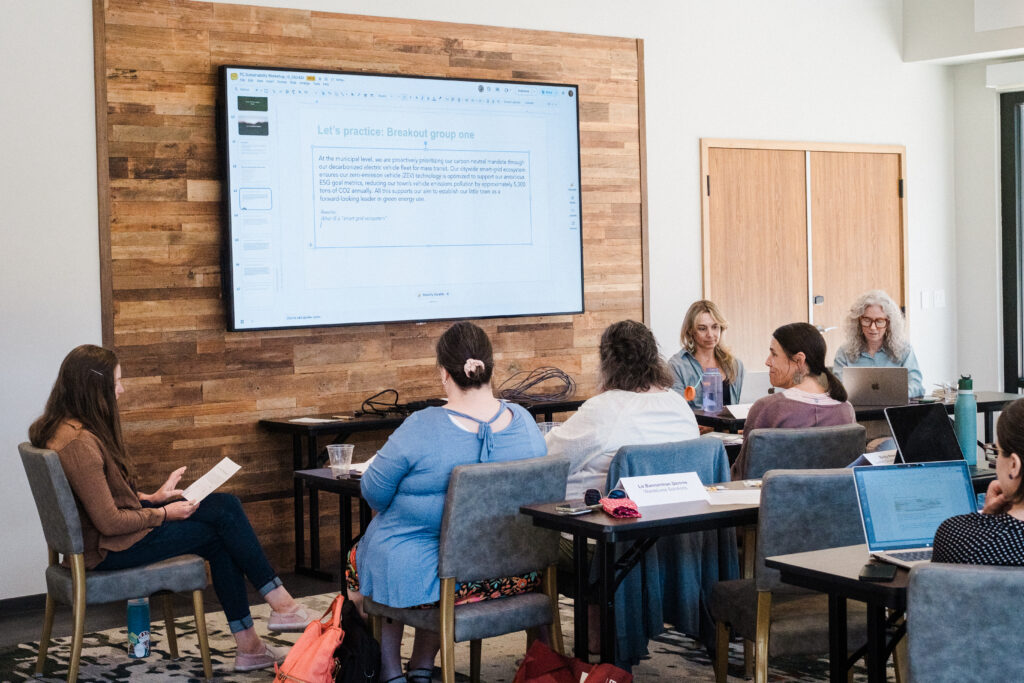
Storytelling
How to get more people to care.
Aha! moments from our most recent sustainability communications workshop.
Storytelling
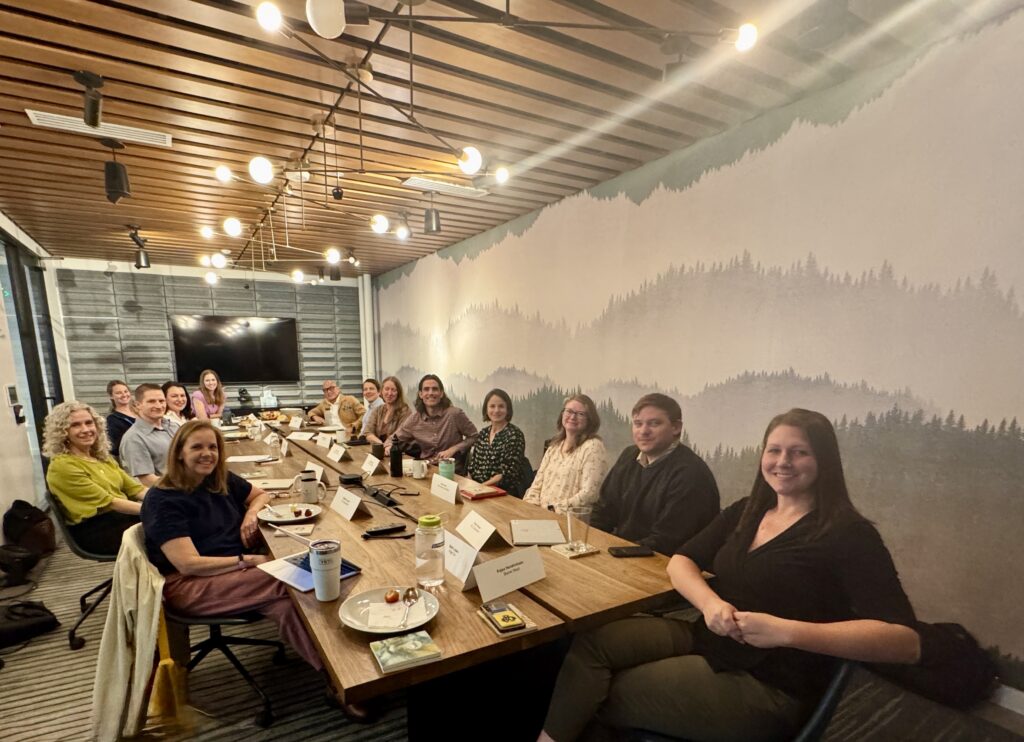
Communicating without polarizing.
Protect your messages against cultural and political pendulum swings.
Storytelling
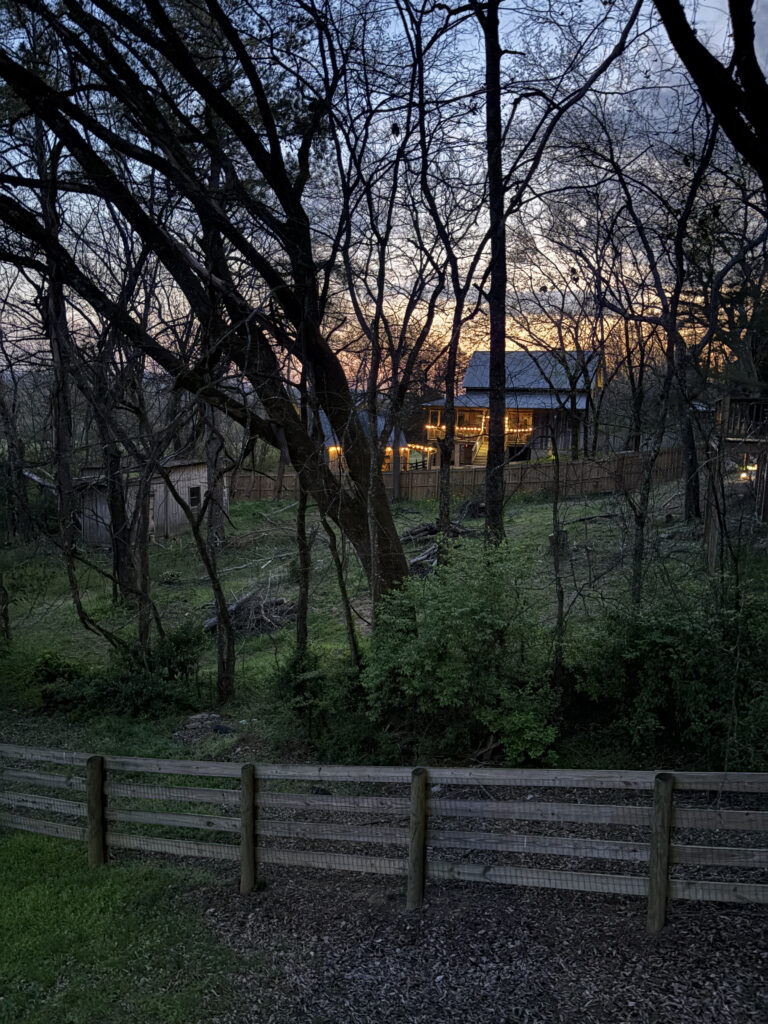
The elephant in the backyard.
Data center development is surging. How we talk about them matters.