
Communicating without polarizing.
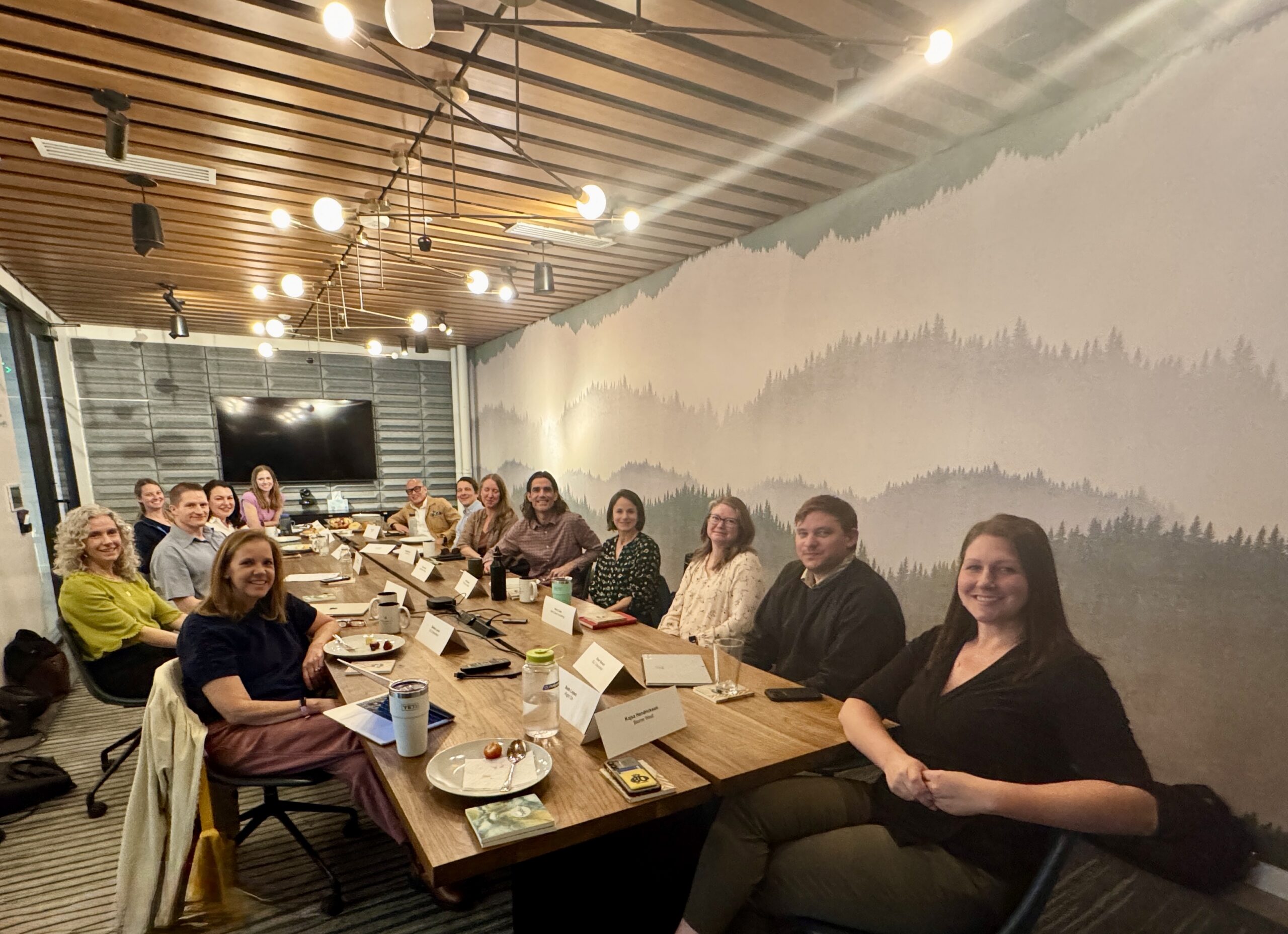
As sustainability leaders, how often do we take away the screens between us and just sit around a table to talk? Typically, we commune through conferences, webinars, LinkedIn feed-scrolling. But the feed doesn’t nourish the soul. Not quite. So last month, we invited local sustainability leaders to sit for a couple hours around a conference room table and share experiences in a safe space for candid conversation. The outcome was better than we could have imagined.
The professionals in the room came from a wide variety of industries—medical technology, government, engineering, tourism, nonprofits, a real estate investment group, and consulting. And while they have sparkling CVs and even more impressive minds, at the end of the day, all of us working in sustainability are human. Doing this work amid the ever-shifting tides of culture and politics can be as discouraging as it is inspiring. We came away from our discussion feeling energized and equipped with new ideas and new connections.
Here are a few of the many takeaways that really stuck with us.
When buzzwords polarize, get down to brass tacks.
Everyone present had played plenty of whack-a-mole avoiding terms that distract and divide. Here were a few suggestions and insights that stuck with us:
- Describe, don’t label. To avoid a polarized word, try substituting a description of the thing rather than the name of the thing.
- Speak to your audience’s everyday needs. If you’re helping low-income households transition to more efficient heating and cooling, contractors and families may or may not care about climate issues, but they care very much about efficient operating costs.
- Sell benefits that have universal appeal. Speaking about protecting real estate property assets from climate-related disasters is easier if you focus on risk management, which any stakeholder will value.
One participant, who worked on a community initiative to reduce food waste, shared a story about dropping off food-waste-prevention yard signs to two neighbors, who each had politically opposing signs in their yards already. The two neighbors came out and, together, had a conversation about their shared view that food in the landfill is wasteful. “People might latch on to different parts of our rationale, but they are connecting,” she said.
To protect against cultural and political pendulum swings, play the long game.
Multiple participants pointed out the imperative to not lose trust among audiences by shifting wildly with the ever-changing political winds.
- There’s no point in knee-jerk reactions. One participant pointed out that his company had been around long before the current administration and will continue to be long after. A key tenet of sustainability is to take a long-term, multi-generational perspective. So, there’s no need to have a knee-jerk reaction to political tides when those tides are something you aim to outlast.
- Keep walking the walk so there’s less to walk back later. If you keep your core underpinnings stable, there’s less to pivot on when the pendulum swings again. You can be poised well ahead of any shifts.
- Steadiness builds trust. It’s easy to get stuck in linguistic triage, but sustainability is less about saying the right thing and more about doing the right thing. That is tangible and builds trust.
One attendee, who works for a global firm, pointed out that not only are they playing the long game, but the rest of the world is doing so as well. “In the US, we can’t formally have DEI programs now, but in Australia it’s actually a requirement that we have them. Even the UAE has a climate reporting requirement now. Literally everywhere outside the US, progress is a priority.”
Inform with facts, and invite with positivity.
Many of us lie awake at night fighting climate dread, yet everyone at the table agreed that doom-and-gloom messaging will deflate audiences rather than spark action.
- “What you get” goes over better than “what you give up.” A recent recycling project garnered much more engagement when the focus was on keeping our community clean rather than focusing on the extra effort it takes to separate recyclables from throw-aways.
- Empower audiences to take part in the action. Telling a ski community that the end of skiing is on the horizon confronts them with a devastating worst-case scenario. Focusing on what mitigates change is more digestible and actionable, whether it’s turning home thermostats down or putting a special window sign in businesses that run on renewable energy.
An attendee working in the ski-town tourism industry noted that calling people in works better than calling them out. Rather than finger-pointing at out-of-town visitors for causing traffic congestion, her town was seeing positive results from inviting visitors to take public transit like the locals do—inviting them to be a part of the community.
We don’t just need to communicate—we need to commune. Often.
Our own biggest takeaway: Yes, sustainability communications feels like a balancing act, and it probably will for a while. But, when we all lock arms in support, the high-wire doesn’t feel quite as tough to walk.
Our Most Recent Insights.
SEE ALL INSIGHTS →
Storytelling
How to get more people to care.
Aha! moments from our most recent sustainability communications workshop.

Storytelling
A future that’s better than break even.
Lessons from a sustainability pioneer on hope, impact, and action.

Storytelling
The elephant in the backyard.
Data center development is surging. How we talk about them matters.