

Communicate with more vulnerability.
What would you do if you weren’t afraid of being canceled?
Would you take responsibility for your company’s impact on the planet? Would you admit that you’re not making progress as quickly as you wish you could? Would you validate your audience’s frustration about this? Would you admit that you’re still learning? Would you share the mistakes you make along the way?
It’s a scary prospect to consider. By putting your organization’s imperfections under the public microscope, you invite scrutiny and risk retaliation—especially in a cancel culture society that all too often defaults to shame, blame, and boycotts. In this charged landscape, and with traditional marketing’s relentless focus on portraying everything in a positive light, it’s easy to see why some sustainability teams only share their A+ work with the public.
But communicating with vulnerability can be a major power move. By admitting to failures and providing clear steps for how you’ll address them, you build trust with your audience, becoming a brand that people believe in and cheer for as you try, fail, and try again.
A few courageous companies are leading the way on this, embracing their messy, imperfect truths and making their brands more human, relatable, and likeable in the process. One of my favorite examples comes from Oatly, which never shies away from addressing their failures head on.
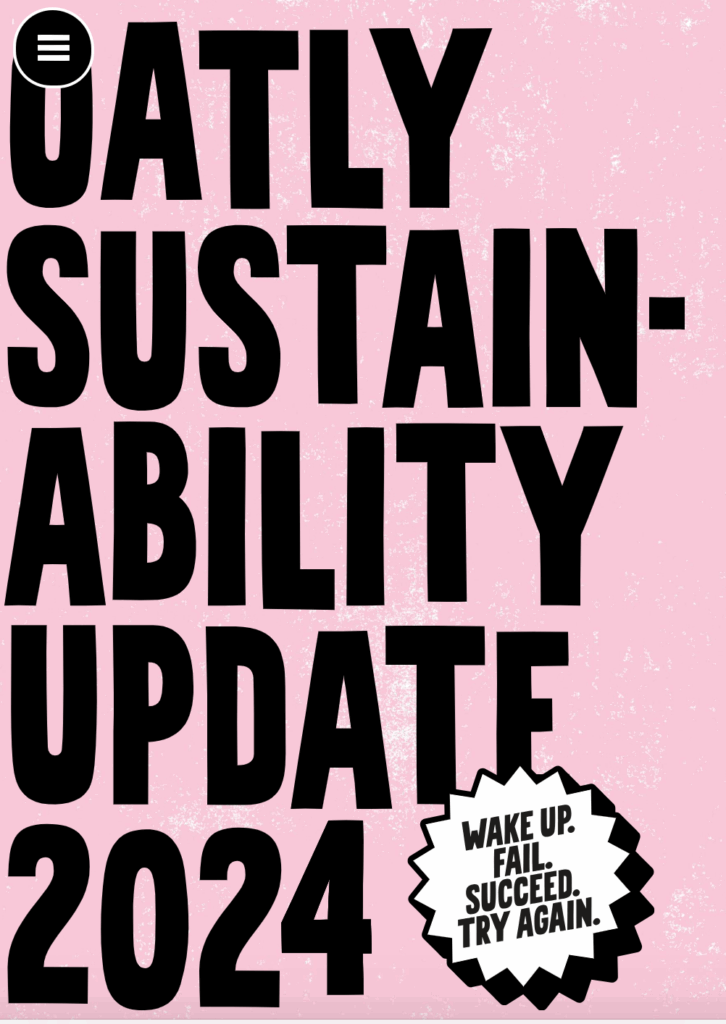
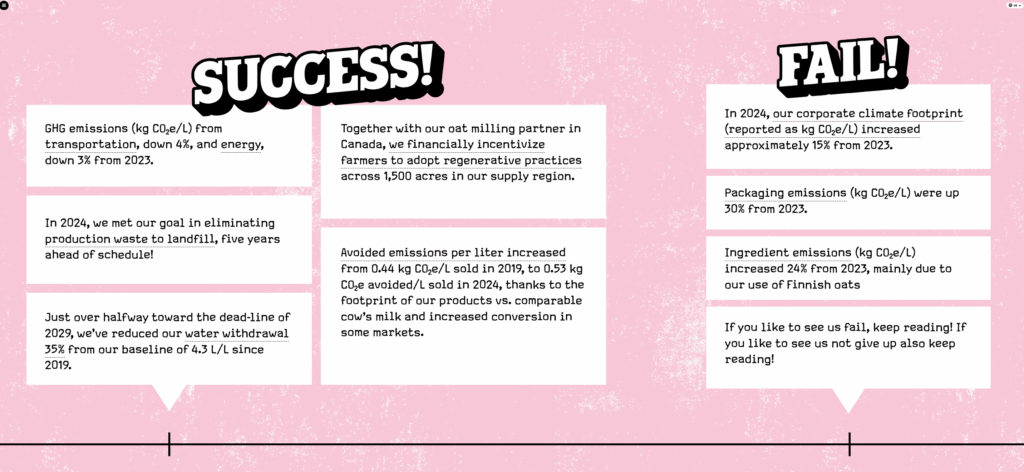
This kind of vulnerability isn’t easy to pull off—it’s got to be genuine, specific, on brand, and confident in conveying the path forward. To think through how it can be done, I sat down with climate strategist, speaker, and author Jenny Morgan. Her new book, Cancel Culture in Climate, provides a roadmap for moving from shame and blame to accountability and collaboration. It also shares strategies to help brands communicate clearly and speak with authenticity.
In our wide-ranging conversation, Jenny and I talked about everything from how fear affects our content to what types of messages inspire action. Here are just a few of the highlights.
Progress, not perfection.
Clearly, there are stark divisions within the climate space. Just look at our ongoing debate over carbon offsets. Some see them as a valid tool, others call them out as a blatant scam. This type of binary thinking is at the heart of cancel culture—and it’s part of what keeps organizations and their leaders from speaking openly and honestly. But by unifying the warring factions, encouraging honest communications, and working together on solutions, we can create a healthy, liveable planet on a faster timeline. And that’s something everyone in the climate community can agree on.
“Cancel culture is almost ravenous in trying to create wreckage in its path, whereas accountability has feedback, and it’s constructive feedback.“
Own your struggles.
Think about your favorite novel. No matter what the story, one thing’s certain: life isn’t easy for the hero. They struggle, make mistakes, face obstacles, fall down, and (usually) pick themselves up. And this is likely a big part of what makes you love the story. If everything went perfectly all the time? Boring. The same is true for your sustainability content. Audiences expect it to be relatable—they want to see the conflicts you faced and the ways you resolved them. But old marketing habits die hard, and companies still have a strong instinct to keep their narratives polished and perfect. The leaders who go against the herd and tell their stories of trial and error will create the most memorable content—and earn the trust of their audiences.
“I think we confuse what success really is. It’s not meeting a final destination, it’s being progressive and wanting to continue to improve.“
Stay true to your values.
In her book, Jenny discusses the “greenrecanting” trend that’s happening now, as companies drop their sustainability initiatives in an attempt to match prevailing political winds. She sees cancel culture as a primary culprit here, too—with some brands in full retreat from after being called out for their “wokeness.”
For brands that stay true to their climate and equity values, there’s a real opportunity to stand out. By remaining committed to their sustainability journey, no matter how different the world looks and how imperfect the journey is, brands can position themselves as credible leaders and flex their strategic staying power. Far from being a risk, this actually boosts their reputation with investors, partners, and customers.
There’s a big fear of saying something wrong. And of litigation. Those are legitimate fears. But you should also be afraid of losing yourself in this conversation.
Cancel no one. Collaborate with everyone.
You can catch Jenny living out the principles of her book at PNW Climate Week, July 16-25. In her panel, Finding Common Ground with a Conservative Environmentalist, she’ll be talking with Benji Backer, one of the key authors of the Make America Beautiful Again executive order. No matter what you think of this executive order, we clearly need to be collaborating with folks like Benji, who can bend the president’s will toward protecting America’s public lands. And getting liberals and conservatives talking together seems like a pretty big step in the right direction.
Our Most Recent Insights.
SEE ALL INSIGHTS →
Strategy
Make the truth memorable.
The stories we tell, and how we tell them, can help keep trolls and untruths at bay.

Storytelling
Why science needs stories.
By combining data with stories, we make meaning from information.

Strategy
How to talk climate with conservatives.
Many conservatives care deeply about the environment. They just talk about it differently.